
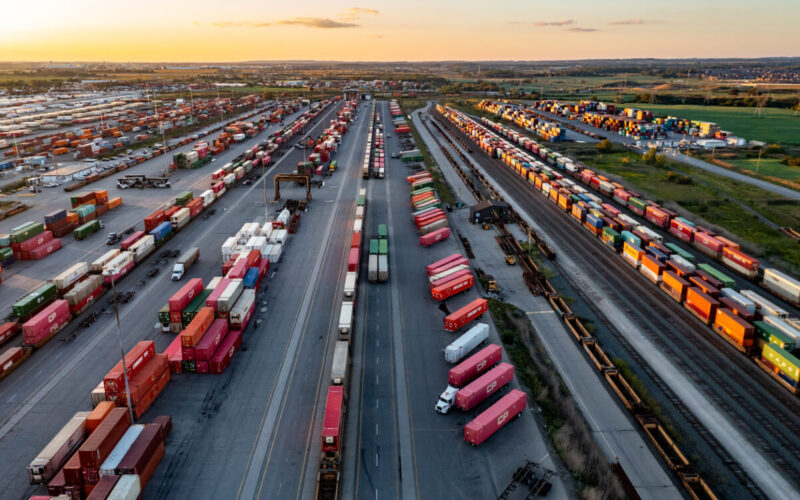
Digital gaps slow AI adoption in intermodal terminals, Port Technology International

By April 24, 2025Articles
rail terminal

A new industry survey from Tideworks Technology and Port Technology International (PTI) has revealed significant challenges in digital readiness across global intermodal terminals, despite widespread recognition of the importance of AI and automation.

Drawing on insights from 107 intermodal rail terminal professionals across North America, Europe, Asia and Latin America, the survey found a stark contrast between digital aspirations and the current state of technology adoption.

Respondents ranged from newly built single-site terminals to extensive multi-terminal networks.

Although 73 per cent of larger terminal networks identified AI and automation as essential for future competitiveness, only 36 per cent reported actually using AI to collect and analyse operational data.

Meanwhile, 60 per cent of terminals cited integration with external partners and customers as their top data management challenge.

Operational efficiency remains a persistent hurdle. Capacity and yard utilisation were flagged as the primary pain point by 63 per cent of respondents.

Additional obstacles included a lack of real-time visibility, data inaccuracy, and insufficient in-house analytics expertise. These issues are preventing terminals from progressing towards more connected, automated operations.

“The appetite for AI and automation is growing, but readiness is the real hurdle,” said Chad Van Derrick, Vice President of Software Product Management at Tideworks.

“To unlock the value of these technologies, terminals need to invest in the basics: a modern data platform, clear governance and optimisation tools that turn information into action. That’s what creates smarter, more resilient operations.”

Read the full article.

Mark Traynor

Chief Product & Technology Officer

Mark Traynor joined Tideworks in 2026 as Chief Product & Technology Officer, bringing more than two decades of hands-on experience in building and deploying terminal technology and automation systems. In this role Mark will lead the company’s product management and engineering organizations and is responsible for the product roadmap and the modernization of the Tideworks platform.

Before Tideworks, Mark was Chief Technology Officer at Lynxis, whose Nascent gate automation systems deployed in nearly 100 marine and rail terminals across North and South America. For Lynxis, Mark led a globally distributed 70+ person engineering team that built a modern, configuration-driven platform on a single codebase while introducing a visual workflow configuration designed to streamline customer implementations. He also introduced cutting-edge computer vision and agentic AI solutions as well as the re-engineering of the hardware to run on readily available commercial components rather than bespoke systems sourced from specialist manufacturers.

For the 13 years before that, Mark was an independent technology partner to major North American automated marine terminal projects, including Virginia International Terminals and Long Beach Container Terminal. These operators relied on him to help lead their most complex terminal operating system implementations driving efficiency and reliability through their gate, rail, yard and vessel operations.

Mark began his career at Navis in 2004, delivering terminal operating system implementations across North America and Europe.